Invasive and Native Plants Basics
Author: Robin Davitt-Murphy. Originally posted in the Town of Denton newsletter, November-December 2025 edition
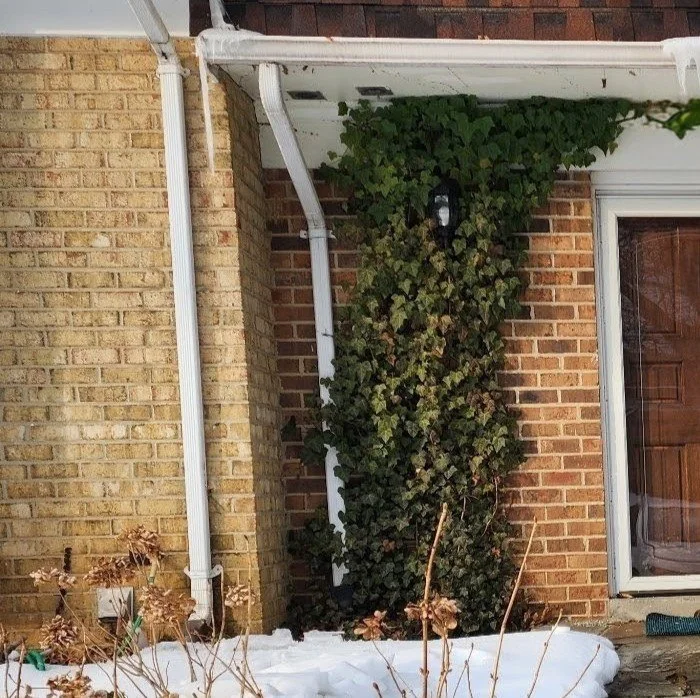
English ivy breaking through a porch ceiling into the house
Photo credit: Robin Davitt-Murphy
Non-native plants that grow so extensively that they displace the essential native species while providing little to no benefit are considered invasive plants. They negatively impact wildlife habitat and even affect water quality. They change the soil chemistry in negative ways and can harbor invasive pests like tiger mosquitoes and different species of ticks becoming more prevalent in coastal Maryland. Invasive plants also hurt the economy.
Native plants occur naturally in the region, co-evolving along with wildlife to form the local ecosystem. They are best adapted to the soils and climate of a particular region, and are less susceptible to disease and insects.
Common invasive plants include English ivy, nandina (heavenly bamboo) whose berries are toxic to birds, liriope, vinca, Eurasian water chestnut, exotic honeysuckles, Chinese and Japanese wisteria, and Tree of Heaven which is also a host plant for the spotted lantern fly. Most of these have native alternatives!
We can minimize this damage by not buying or planting invasive plants and removing or controlling them as realistically as possible. Stay tuned for another post with more information.
Introduction to Invasive Plants in Maryland (University of Maryland Extension)
Field Guide: Plant Invaders of Mid-Atlantic Natural Areas (Maryland Department of Natural Resources)
Native Plant Alternatives Lists (Wild Ones Delmarva Chapter)
Where to Purchase Native Plants (Wild Ones Delmarva Chapter)
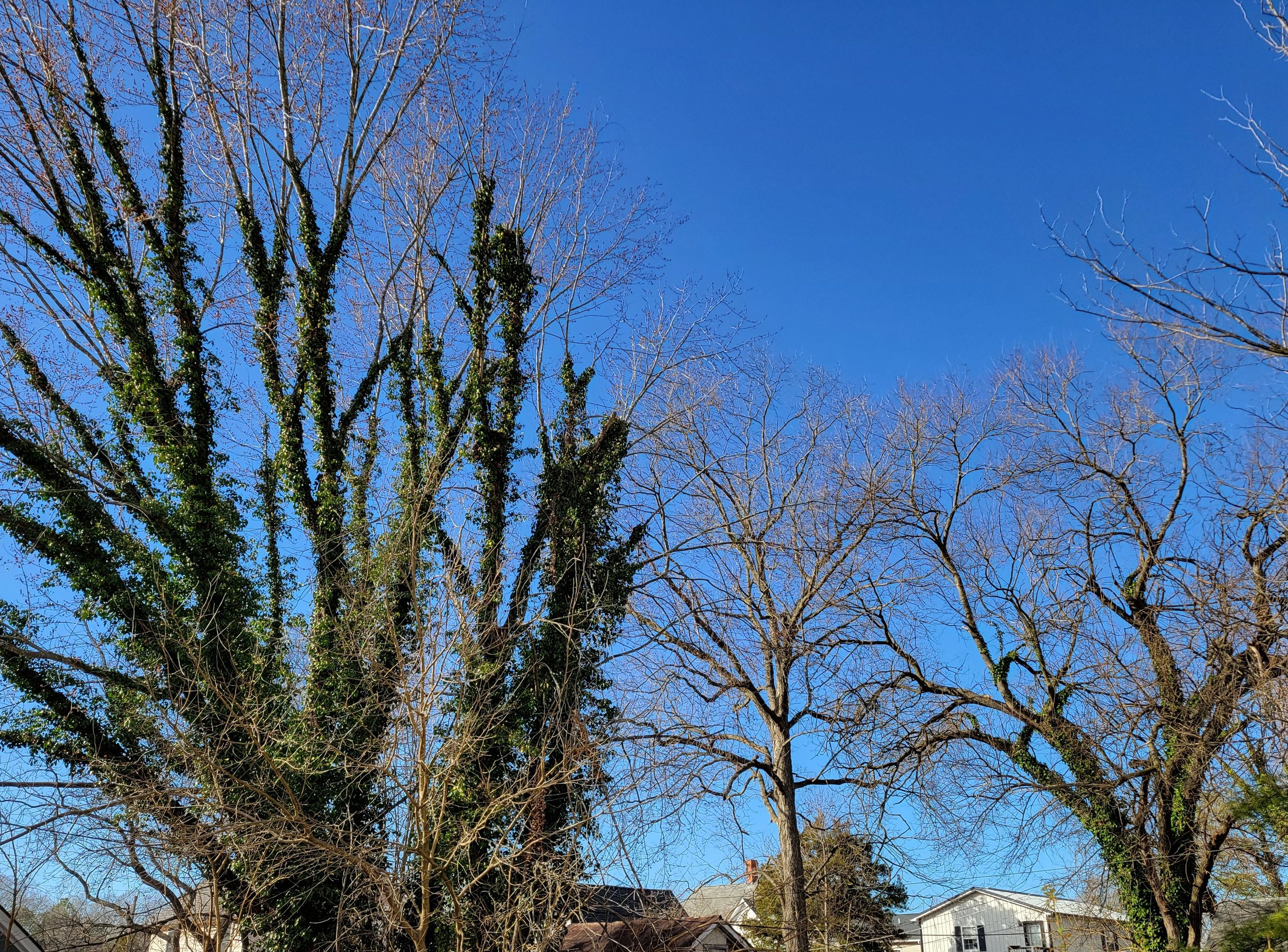
English ivy taking over trees and creating a “sail” that could bring them down during a storm
Photo credit: Concetta Gibson